


Northern Yellow Warbler
Setophaga aestiva
| Early Spring Date: | April 18 |
| Late Spring Date: | June 1 |
| Best Dates to See in Spring: | April 28 - May 8 |
Spring: Northern Yellow Warblers are common in the Washington area, but not at Monticello Park. They nest in deciduous habitats near water, including in Alexandria along Four Mile Run and along the Haul Road at Dyke Marsh. On average, about ten are encountered each spring at Monticello. They are most likely to be in the park around the first week in May.
Fall: Very few Northern Yellow Warblers pass through Monticello in the fall. During most years, either one or none are recorded.
Where to See Them in the Park
Northern Yellow Warblers sometimes forage in the brush on the knoll. On occasion, they will go into the stream to bathe or drink, but you are more likely to see them hopping around in the brush near the stream.
Physical Description
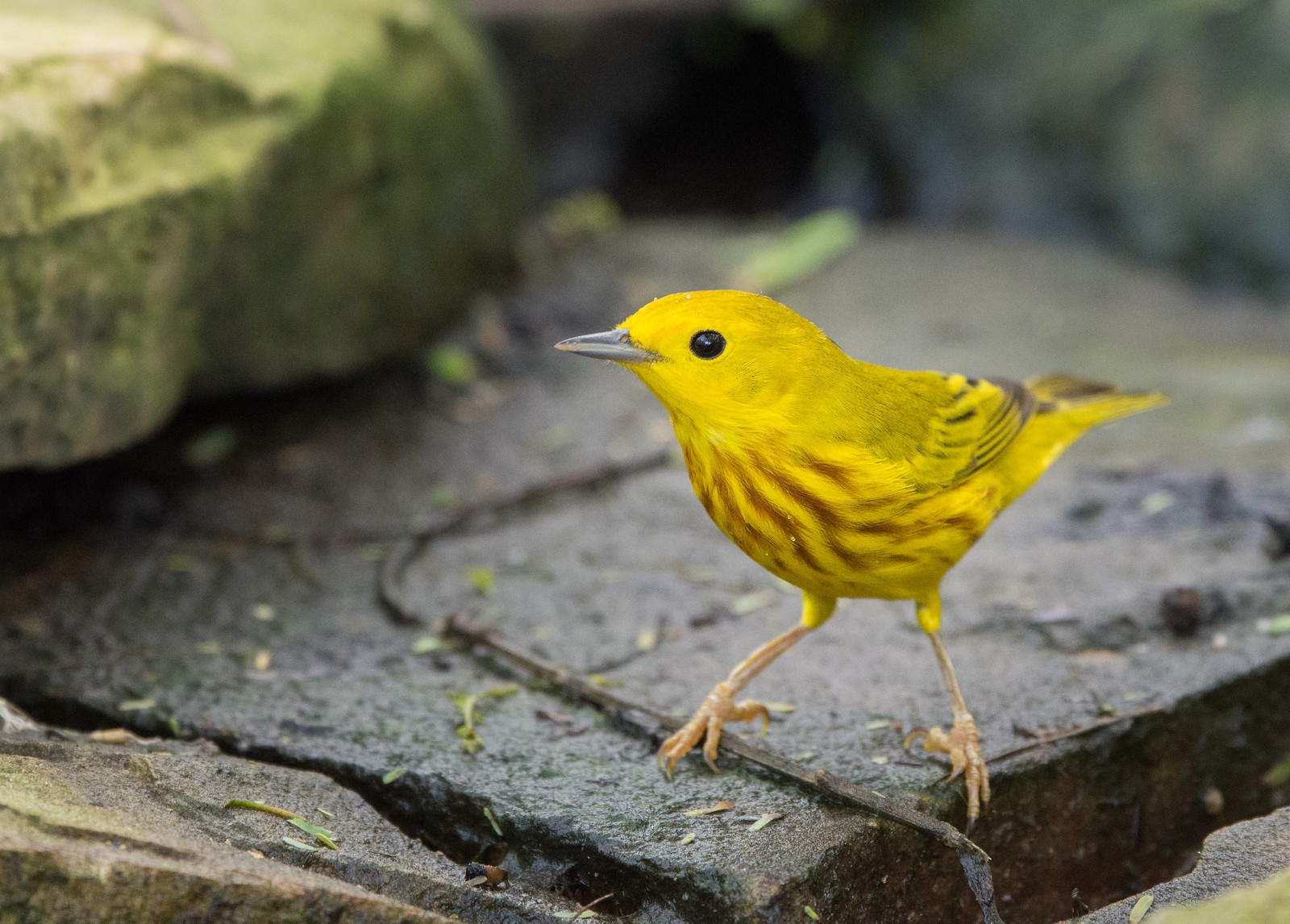
The male is bright yellow, with black eyes and a black bill. The eye and bill stand out on the yellow head. The underparts are yellow with heavy red streaks.
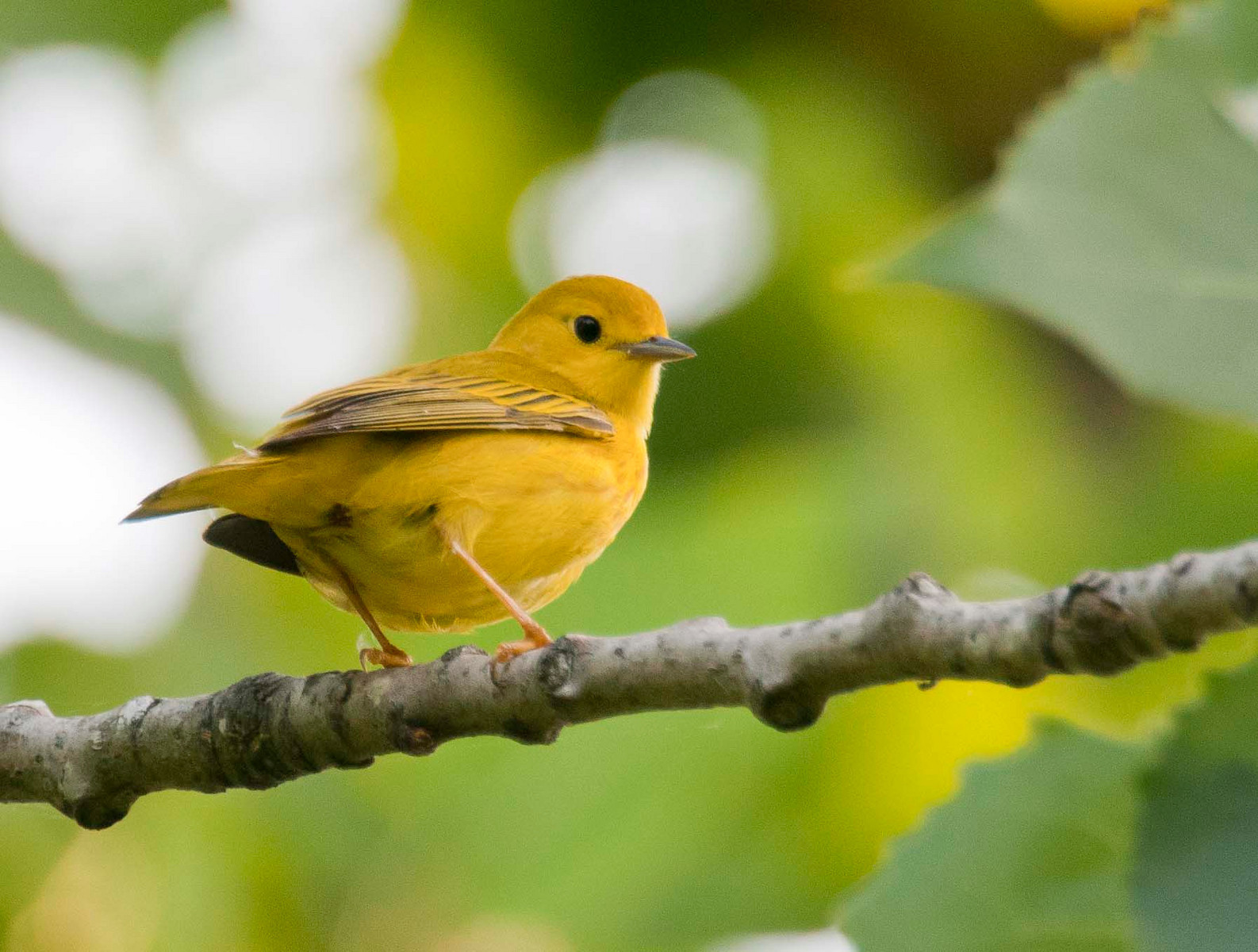
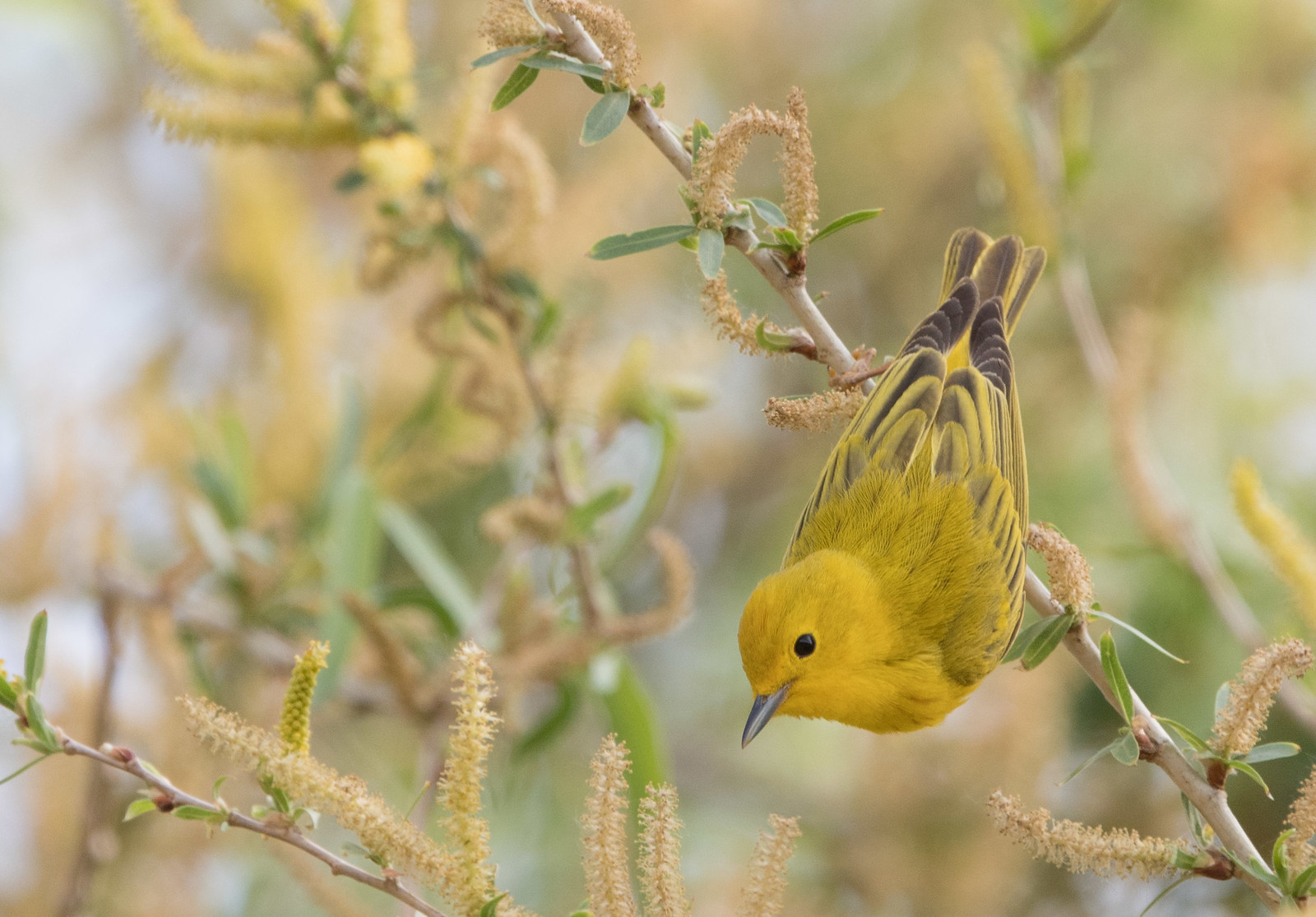
Females are not as brightly colored as males, and they lack the prominent red streaks. Both males and females have yellow undertail coverts.
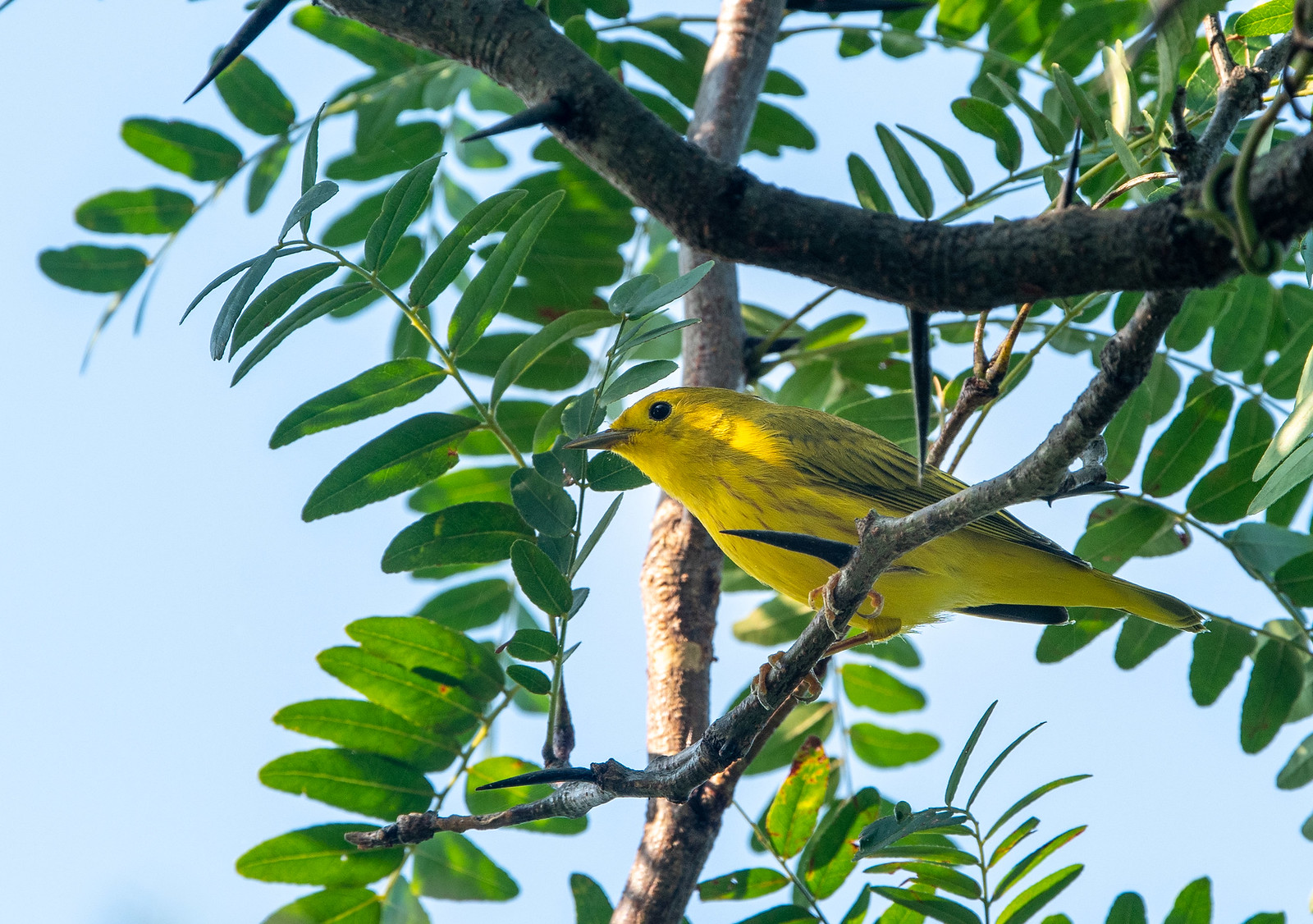
Fall: Fall adult males resemble spring adult males, but they tend to have less streaking. Fall adult females are similar to spring adult females.
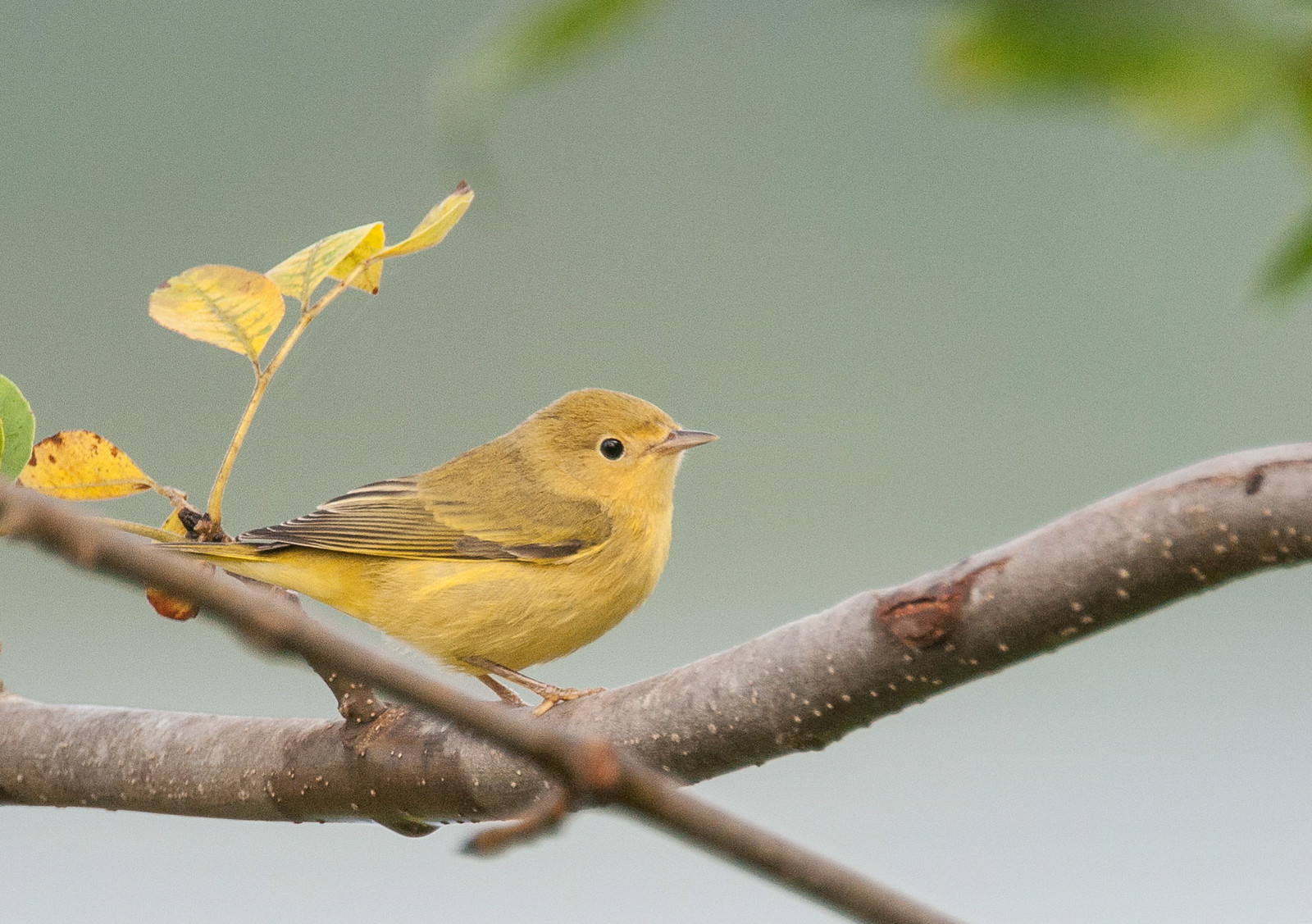
Some first-year birds of both sexes are a drab olive green or brown, and they can be confused with either Nashville or Orange-crowned Warblers.
Vocalizations
The Northern Yellow Warbler's song is a perky sweet-sweet-sweet-a-little-more-sweet.
Hear the vocalizations of the Northern Yellow Warbler.
Notes
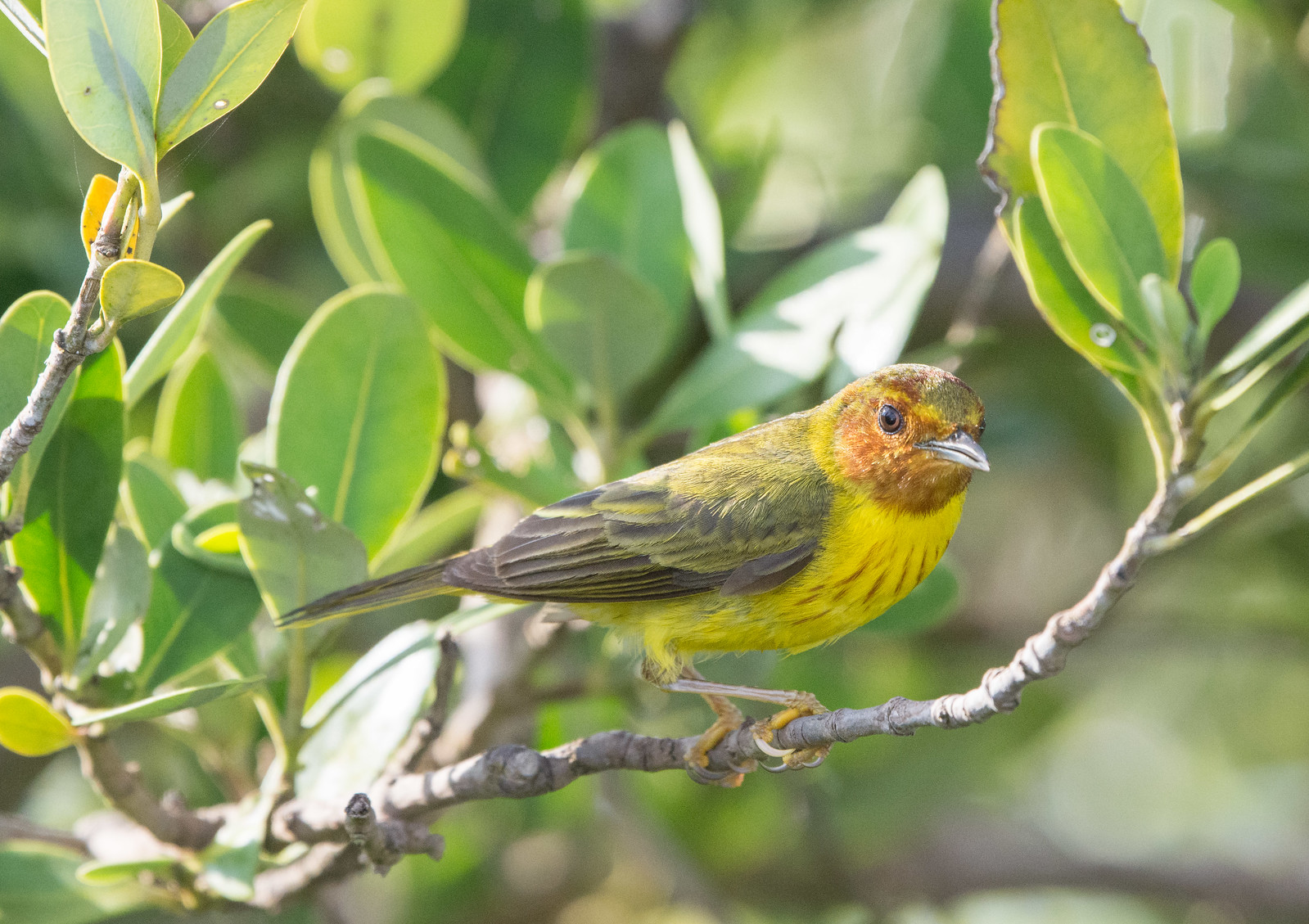
The Yellow Warbler group is widespread throughout the New World. It has more than 30 subspecies, varying in size and appearance. The species has been split, and the birds seen at Monticello Park are now called Northern Yellow Warblers with a new scientific name. Northern Yellow Warblers spend the winter in Central and South America. A new species called the Mangrove Yellow Warbler has varying amounts of chestnut on the head, depending on the age and sex. These warblers have kept the Yellow Warbler's previous scientific name of Setophaga petechia.
Origin of Names
Common Names: Northern from the bird's breeding range. Yellow from the plumage. The New World Warblers were named for their similar appearance to European warblers, to whom they are not related. Most of the New World warblers do not warble (sing continuously with notes that change frequently).
Genus Name: Setophaga means moth eating.
Species Name: Aestiva means of the summer.
Yellow Warbler video footage
Return to the Index